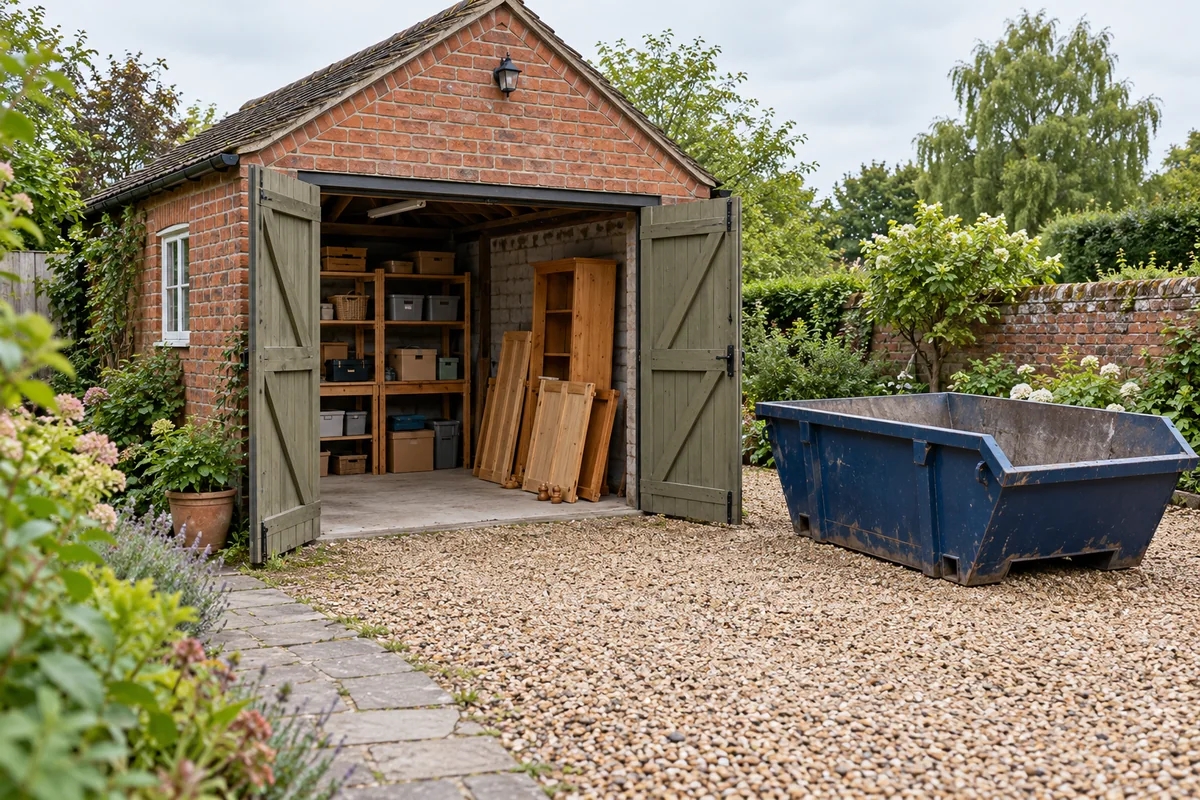
A larger household clearance
Dismantled shelving and cupboards use space differently from loose bags. Describe your largest pieces so the volume can be judged before hiring.
Compare the space and suitable jobs before choosing an 8-yard skip.
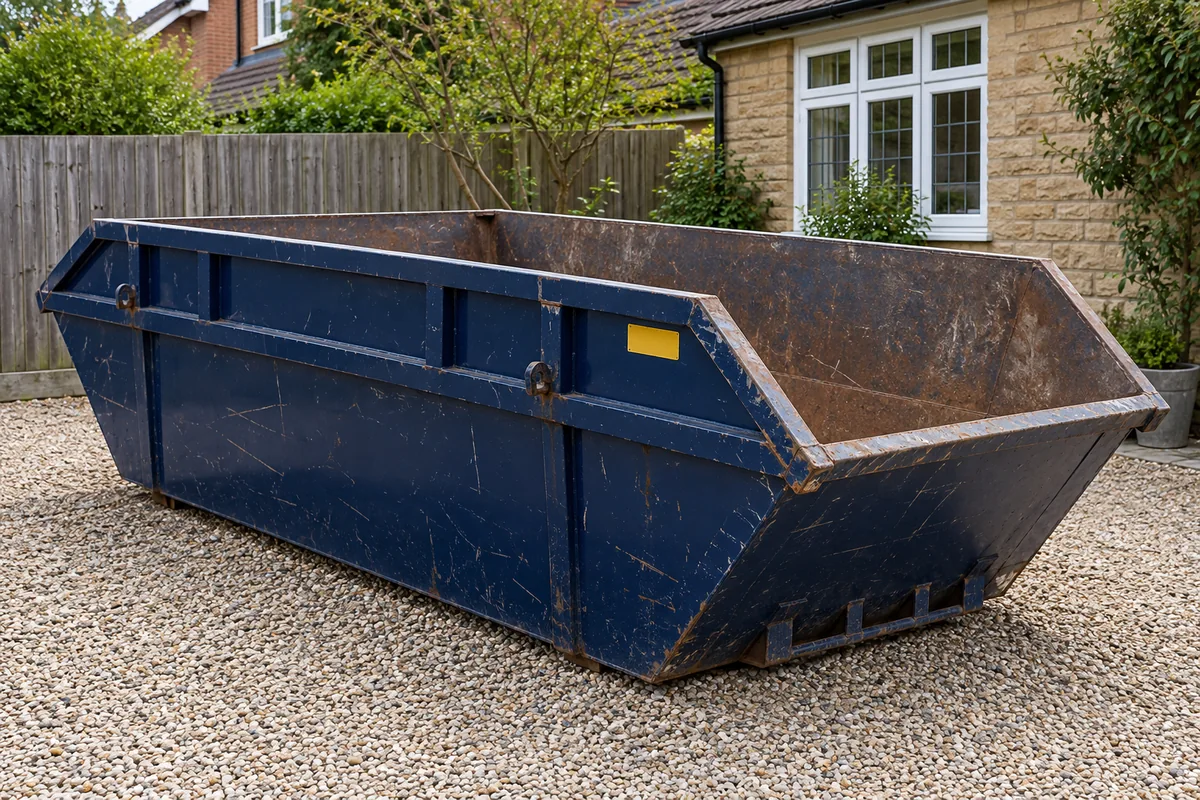
Picture the container’s footprint before measuring your available space.
Eight cubic yards is about 6.1 cubic metres of volume. These are approximate supplier-guide measurements; the actual skip model and delivery approach must be confirmed.
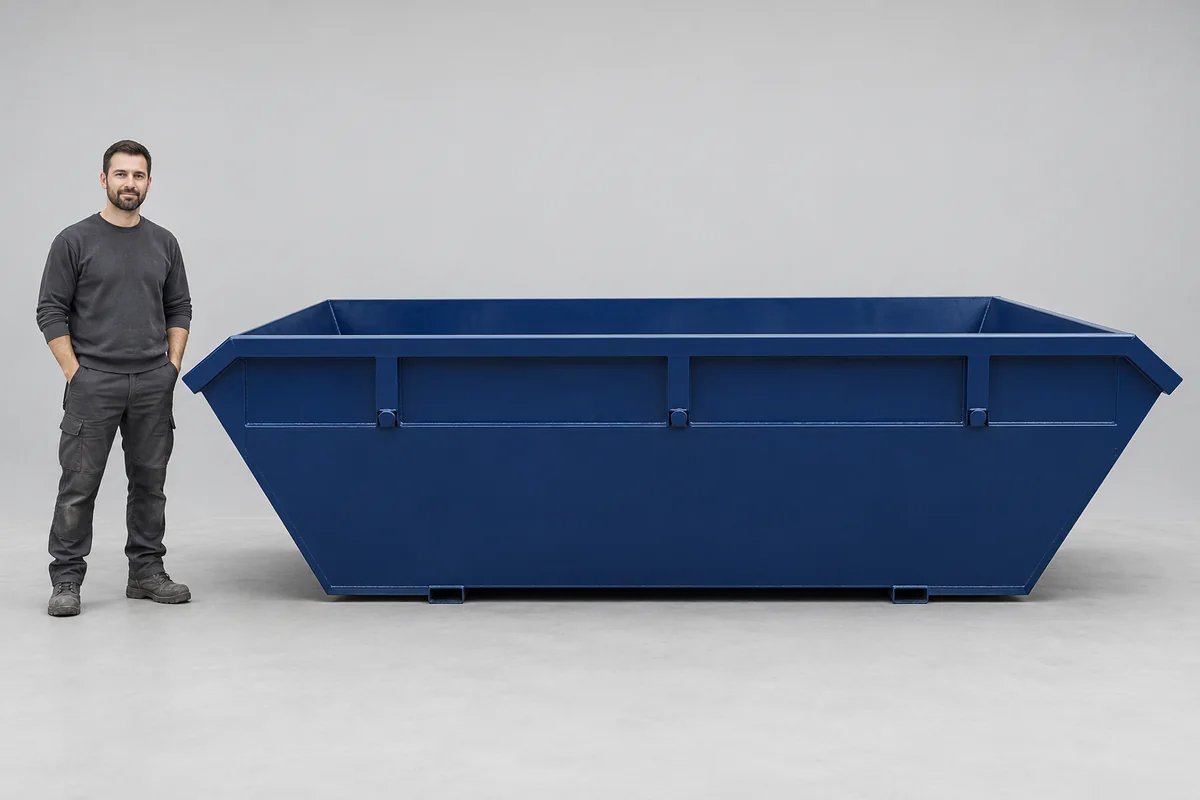
The extra room is useful for bulky material, but the waste still decides the loading allowance.
Dismantled shelving and cupboards use space differently from loose bags. Describe your largest pieces so the volume can be judged before hiring.
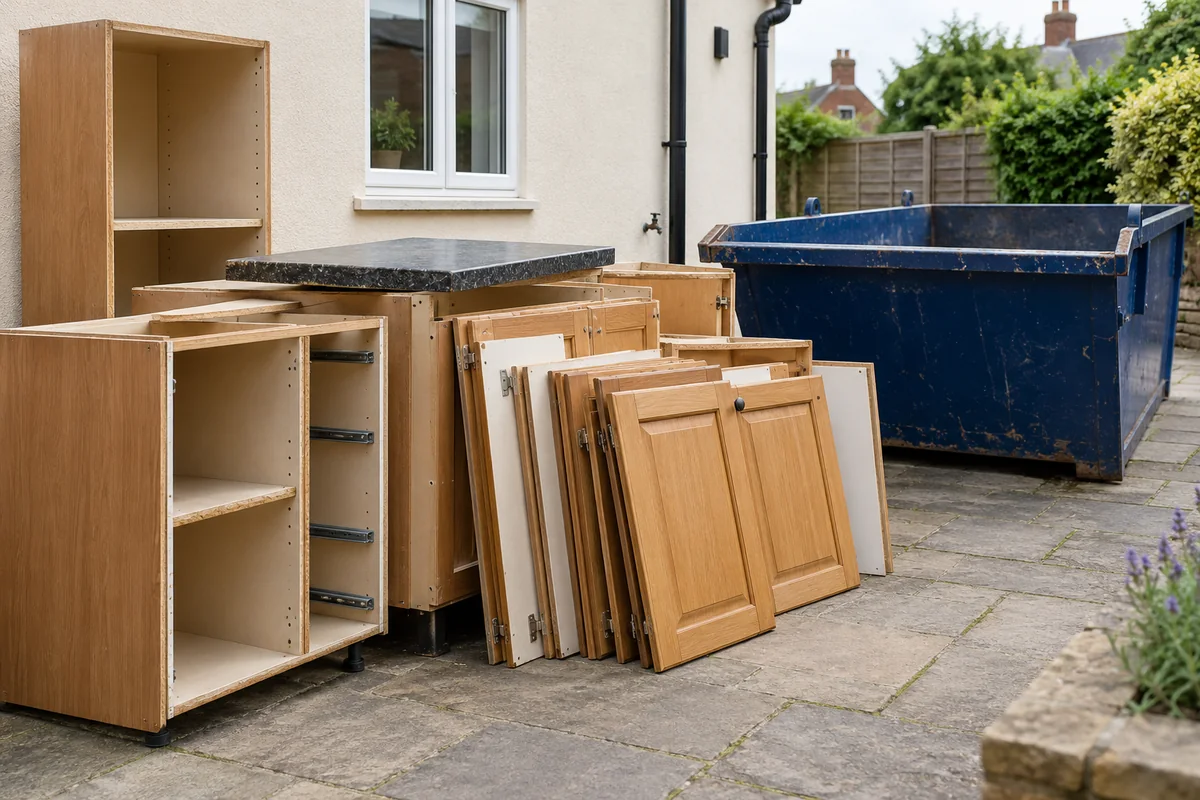
Cabinet panels can use the extra volume. Tiles, bricks and other dense material must be described separately; they do not become suitable just because space remains.
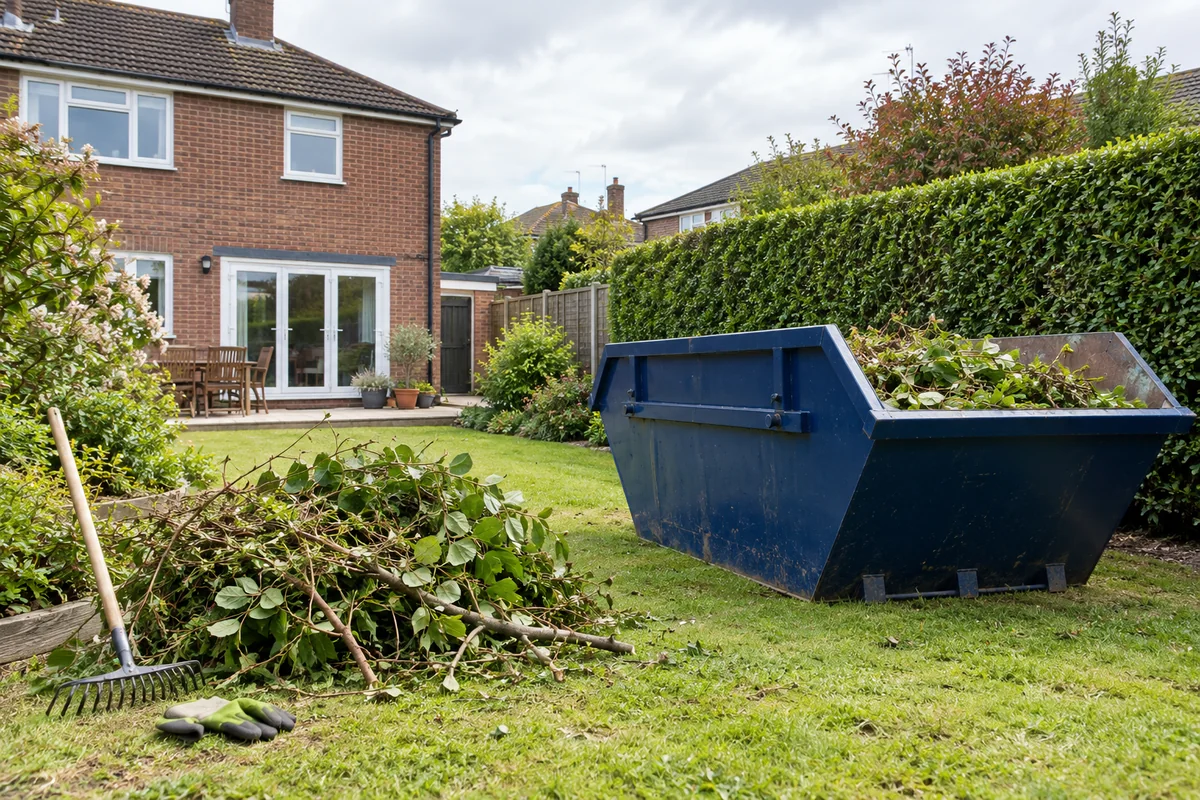
Light bulky garden material may need more room than expected. Digging out turf or soil is a different weight question and may need another skip or loading plan.
Keep the load level beneath the fill line. Do not balance extra boards above the sides to gain more volume. A half-empty skip can still reach the agreed weight allowance when it contains dense material.
Some models have a drop-down loading door; others do not. If a door matters for your job, ask for that feature before booking rather than relying on a photograph.
Check the general waste restrictionsIts guide footprint is about 3.45m by 1.75m; the delivery needs additional working room.
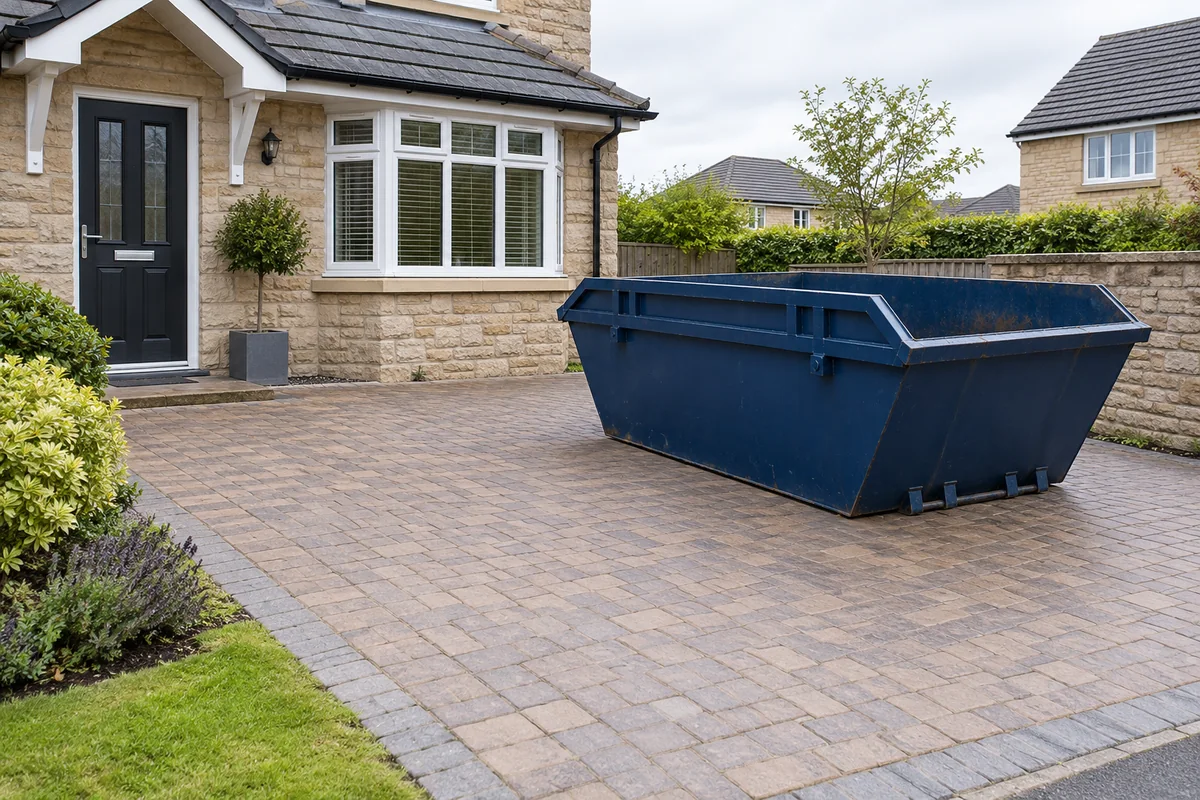
Allow for the complete container without blocking a door, gate or shared access. The guide width does not describe the space occupied while the lorry is placing it.
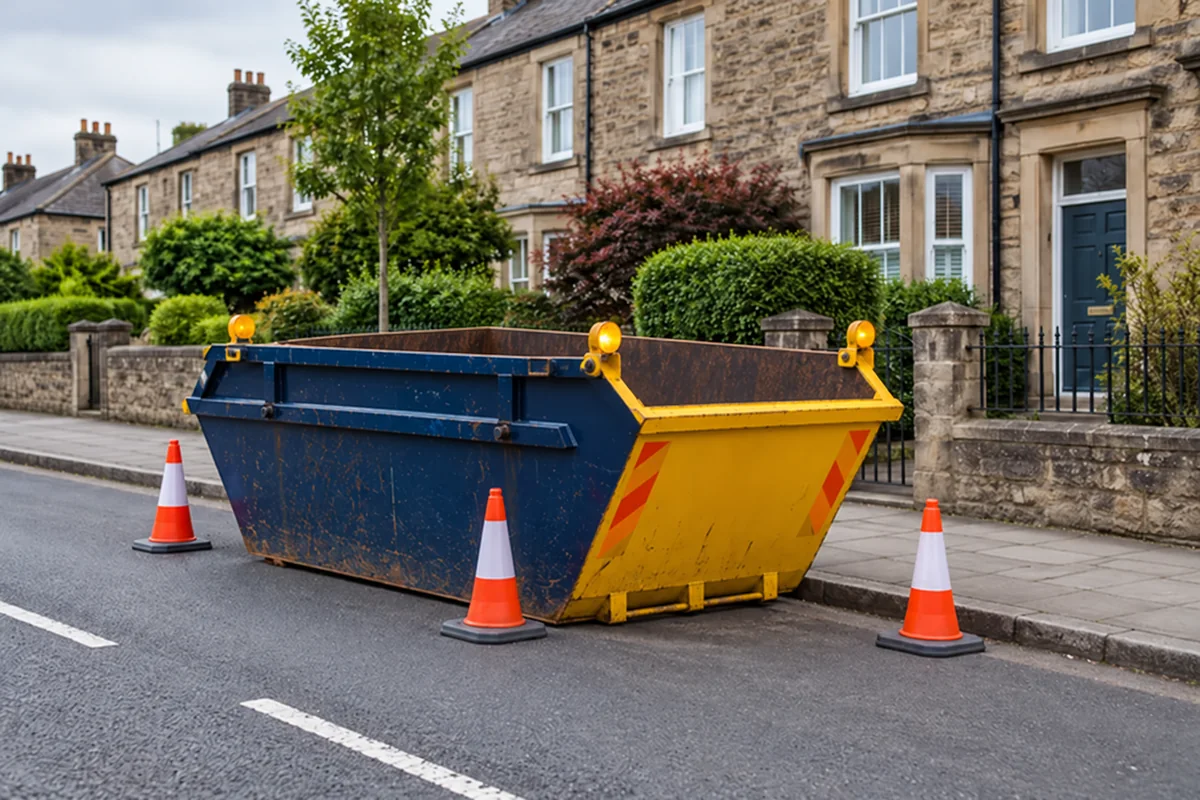
An 8-yard skip still needs the appropriate road permission. Describe the position and any parking restrictions before treating the kerbside space as available.
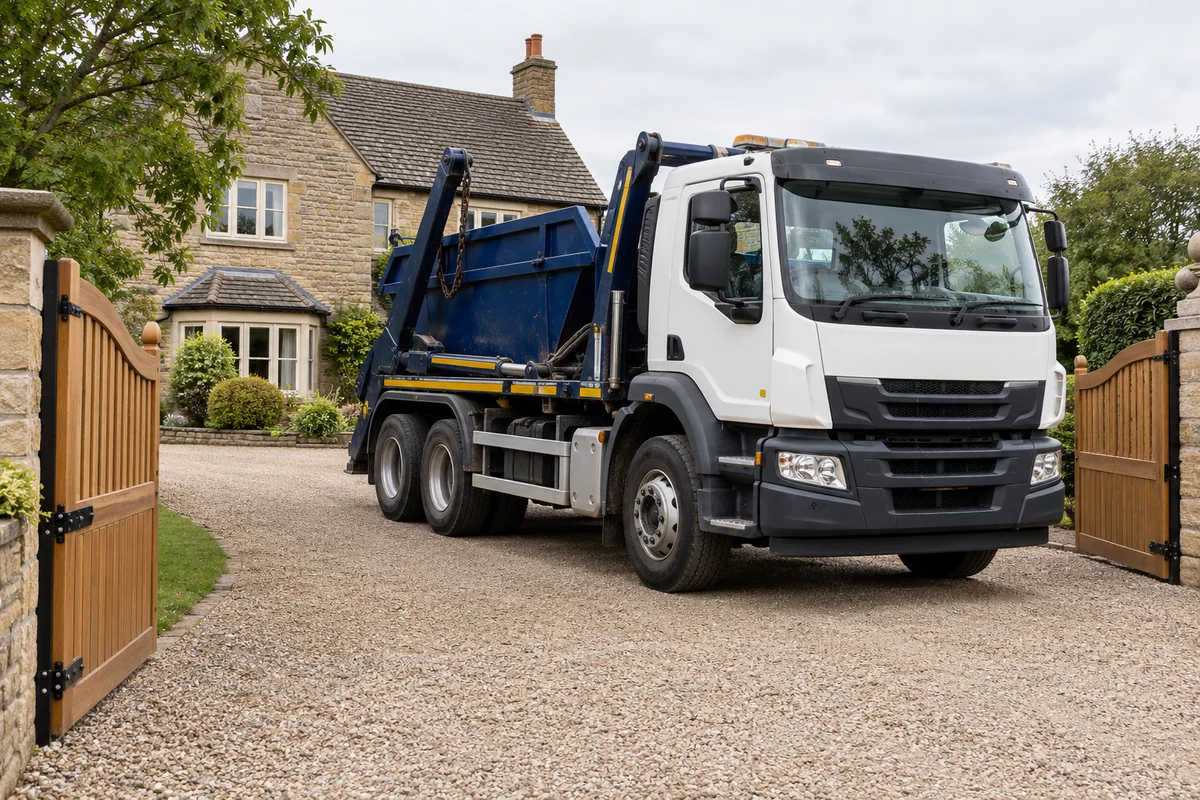
Give entrance measurements and mention a tight turn, slope or overhead obstruction. The driver’s access cannot be confirmed from the skip length alone.
The quotation needs the actual materials as well as this size. A bulky timber clearance and an 8-yard container requested for heavy rubble are not interchangeable loads.
Tell us the postcode and how long you need the container. Confirm collection, VAT and any permission costs in the total, and ask about a door or other model requirement before the price is agreed.
Consider volume, side height and waste type together.
| Size | Length × width × height | Typical volume decision | Guide |
|---|---|---|---|
| 6 yard | 3.1m × 1.75m × 1.2m | Medium clear-outs and renovation waste | View 6-yard guide |
| 8 yard | 3.45m × 1.75m × 1.2m | Bigger clear-outs and renovation jobs | Current size |
| 10 yard | 3.45m × 1.75m × 1.6m | Larger amounts of bulky, lighter waste | View 10-yard guide |
The 10-yard guide has taller sides than this 8-yard model, with the same listed length and width. It offers more volume for suitable lighter waste; it does not establish a higher heavy-material limit.
The actual model and its door movement need confirming. Say where you intend to stand the skip and how you will reach the opening. Do not assume the container dimensions include door access.
Describe that load before selecting this size. The supplier must agree dense materials and quantities; the eight-yard volume is not permission for a full heavy load.
Check before changing the planned load. An extra item or a different material can affect acceptance, handling and price even if the container has space available.
Describe the large items, any heavy materials and the delivery address.